

AI Domain Names: How to Choose and Register One
TL;DR: AI domain names, especially
.ai, help an artificial-intelligence business signal its niche, but they provide no direct SEO advantage. Choose a short, memorable, legally safe name, compare.aiwith.comand.in, and check renewal costs plus email support before registering.
Naming an AI startup, developer tool, agency, or creator project is harder than it looks: the short, credible name you want may already be taken, parked, or priced above your launch budget. That pressure is real when you need a trustworthy name before your product is ready. The .ai registry had more than 600,000 registered domain names in January 2025, so waiting rarely makes the good options easier to find. This guide shows how AI domain names work, how to shortlist and check one, what registration and renewal cost, and when .com or .in makes more sense.
| Point | Details |
|---|---|
| Define Your Purpose | Decide whether the domain will represent an AI product, personal project, agency, community, or broader technology business before searching. |
| Prioritise Memorability | Aim for a short name that is easy to say, spell, type, and recall, and avoid numbers or unnecessary hyphens. |
| Compare Extensions | A .ai domain signals an AI focus, while .com or .in can support broader positioning or stronger local relevance. |
| Check Legal Risks | Search existing brands, trademarks, and confusingly similar domains before building around a name. |
| Plan Renewal Early | Domains are commonly registered for 1 to 10 years, so renew before expiry to keep connected websites and email active. |
What Are AI Domain Names and Who Should Use Them?
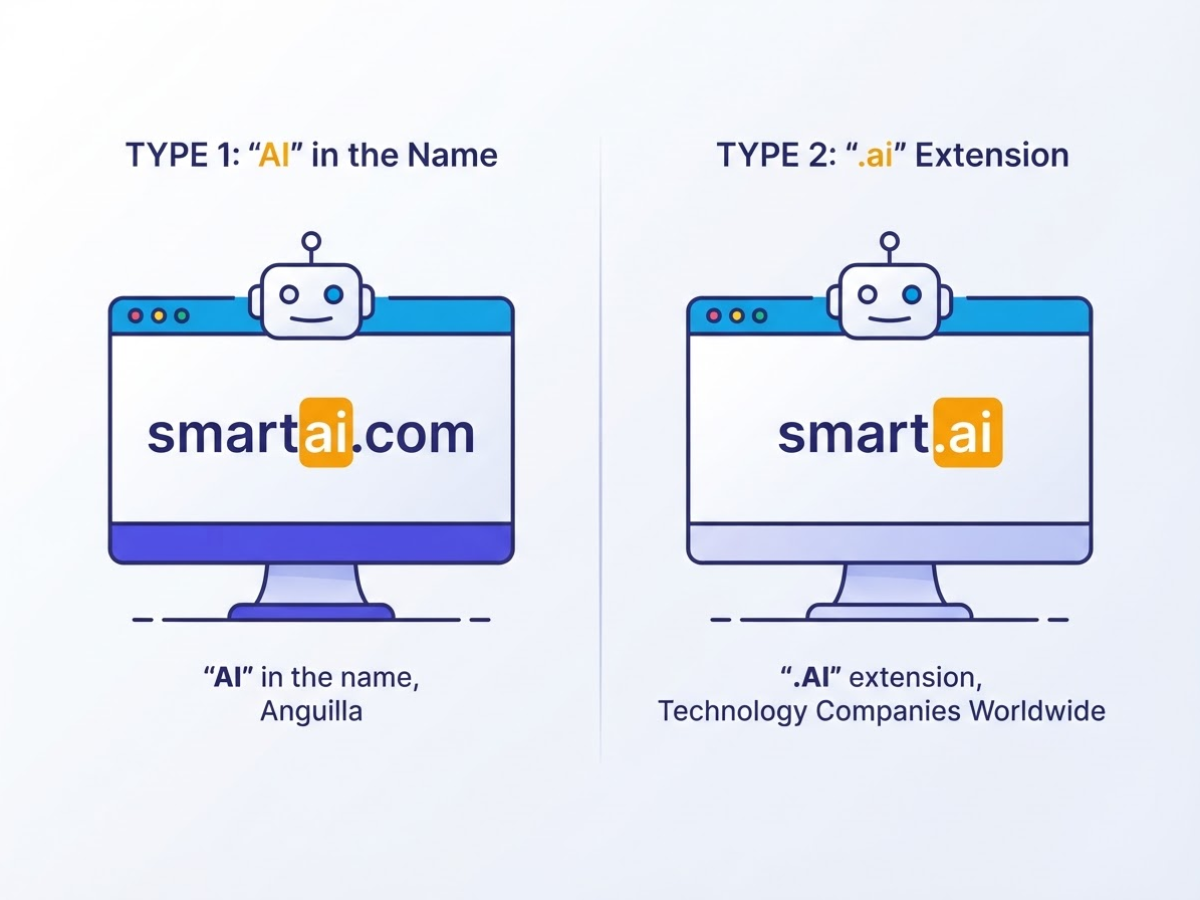
When I help a new product choose a web address, “AI domain name” usually means a domain connected to artificial intelligence, not one strict naming format. It can describe the home of an AI business, software product, research project, creator, or online community. The most recognisable option is the .ai country-code top-level domain, which is associated with Anguilla but is widely used by technology companies worldwide.
There is an important difference between these two ideas:
| Type | Example | What it communicates |
|---|---|---|
| “AI” in the name | smartai.com |
The letters appear in the brand or domain name |
.ai extension |
smart.ai |
The web address signals an artificial-intelligence focus |
You can use “AI” in a .com, .in, or another extension, and you can use .ai without putting “AI” anywhere else in the brand. I generally prefer a name that still sounds natural when spoken aloud. Awkward spelling and forced keywords create more problems than they solve, especially when customers need to type the address from a slide or podcast.
AI domain names suit several practical audiences:
- SaaS teams launching an AI writing, analytics, support, or workflow product
- Developers building machine-learning tools, model APIs, or automation services
- Agencies and consultants that install AI systems for clients
- Education platforms teaching prompt writing, coding, or data science
- Researchers, creators, and communities publishing experiments or resources
- Individuals presenting an AI-focused portfolio or freelance practice
The .ai ending gives your positioning a quick visual signal, but it does not create trust, traffic, or search rankings by itself. Google says keywords in a domain or URL path have hardly any ranking effect, so content, reputation, usability, and technical quality still do the heavy lifting. The extension is also not a shortcut around a weak brand or confusing website.
Demand is real: the .ai registry reported more than 600,000 registered domains in January 2025. That popularity can make strong names expensive or unavailable.
Pro Tip: If the business may expand beyond artificial intelligence, choose a brand name that remains credible even if the technology category changes.
With the audience and trade-offs clear, you can judge which available name and extension fit your business before registering one.
How to Choose an AI Domain Name That Sticks
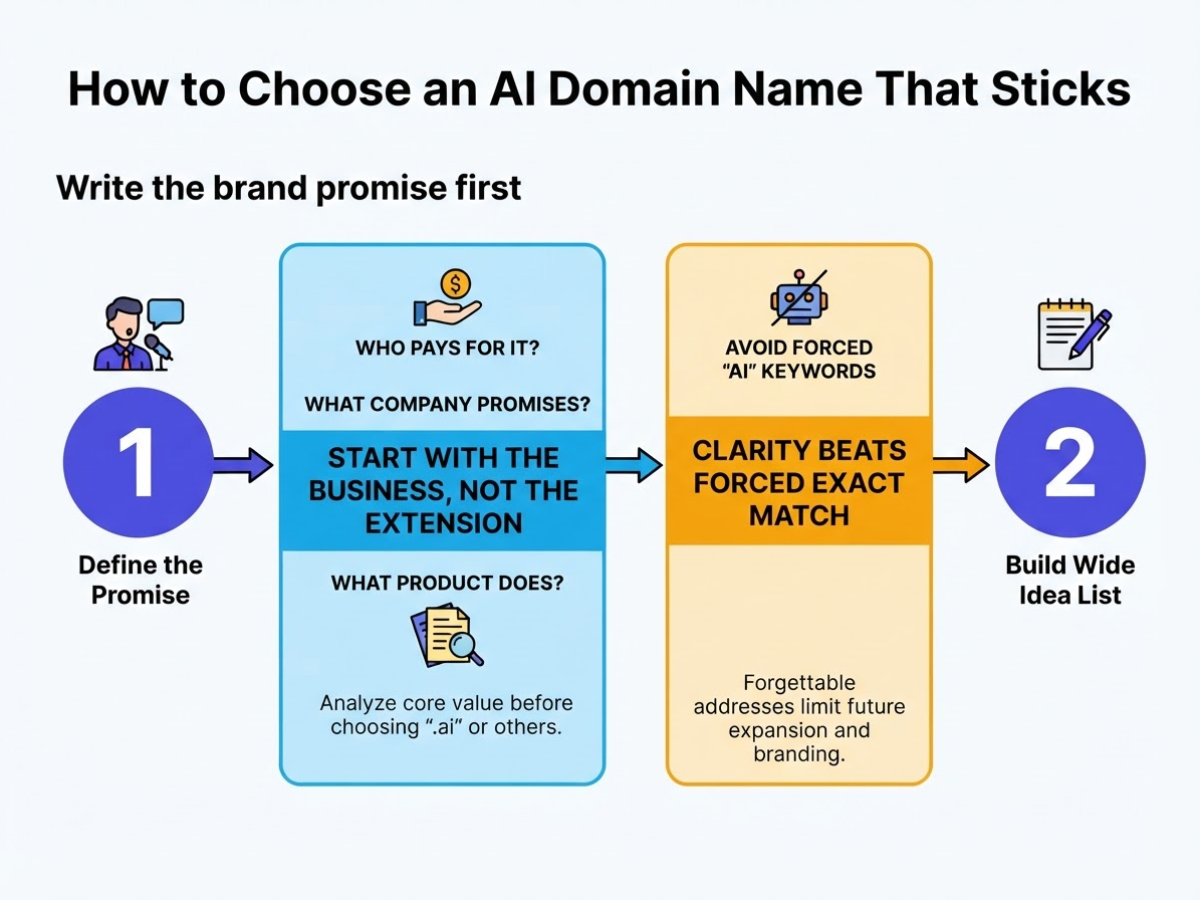
A good shortlist starts with the business, not the extension. When I review AI domain names for a new product, I first ask what the company promises, who pays for it, and what the first product actually does. Forcing “AI” into the name often produces a forgettable address that becomes awkward when the company expands.
- Write the brand promise first.
Describe the result in one sentence: “We help Indian retailers forecast stock,” or “We turn long support calls into searchable notes.” Then identify the target customer and main product. Use those details to guide the name, but do not treat an AI keyword as mandatory. Google says keywords in a domain name or URL path alone have hardly any ranking effect, so clarity beats a forced exact match.
- Build a wide but relevant idea list.
Try four sources: brandable words such as “Lumen” or “Vanta,” category terms such as “ledger” or “clinic,” founder names, and invented combinations. Generate 30 to 50 rough ideas before judging them. That feels excessive, but stopping at five usually means you are choosing between near-duplicates. A name like “InvoicePilot” says more than “BestAIInvoiceAutomationTool.”
- Say every candidate out loud.
Aim for a short name that people can pronounce, spell, and remember after hearing it once. Avoid stacked hyphens, unexplained abbreviations, numbers, doubled letters, and spellings that require a five-second explanation. If a customer has to ask whether “flow” contains one “w” or two, the name is costing you effort before the first sale.
Pro Tip: Read each finalist aloud in a noisy environment and ask someone else to type it; this catches spelling problems that look invisible on screen.
- Check the wider identity.
Search the exact name across major social platforms and check useful extensions, especially .com, .ai, and your local extension. You will not always secure every profile, but an unrelated account with the same name can create support headaches. Before registering, read how to choose and register an AI domain so you understand the practical checks as well as the price.
- Score the final five.
Give each candidate a score from 1 to 5 for memorability, relevance, availability, legal safety, and future flexibility. A name scoring 25 is not automatically right, but a name scoring 2 for legal safety should leave the list. Search trademarks in the markets you plan to serve, and test whether the name still fits if your product grows beyond one AI feature.
Once your grid leaves you with two or three credible options, compare the registration cost and renewal terms before committing.
Choosing Between .AI, .COM, .IN, and Other Extensions
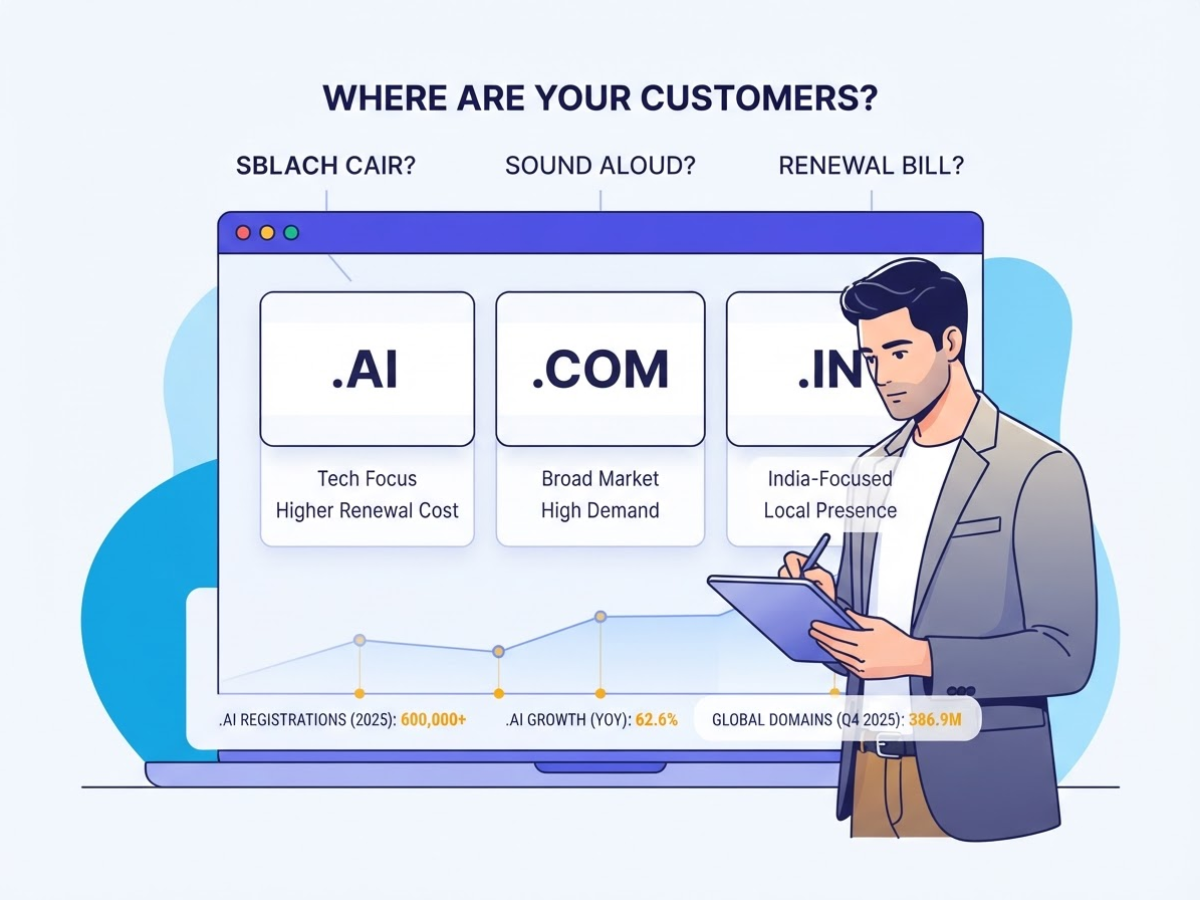
The extension changes the first impression, but it does not rescue a weak brand. When I review domain shortlists for products, I ask where the customers are, how the name sounds aloud, and what the renewal bill will look like after the launch discount disappears.
| Extension | Best fit | Main advantage | Watch-outs |
|---|---|---|---|
.ai |
AI tools, automation products, and technical startups | Signals a technology focus immediately | Higher renewal pricing, more competition, and occasional pronunciation confusion |
.com |
Businesses serving a broad or international market | Familiar, easy to explain, and widely expected in email addresses | Strong names are often unavailable or expensive |
.in |
India-focused companies, local services, and Indian startups | Reinforces an India connection and can offer better availability | Some international customers may assume the business operates only in India |
Choose .ai when artificial intelligence is central to what you sell, not merely a feature on your roadmap. Interest is rising: GoDaddy reported 62.6% year-over-year growth in .ai registrations during 2025. That growth helps the extension feel established, but it also means more desirable names are disappearing and some registrars charge noticeably more at renewal.
A .com can still position an AI company well if “ai” appears in the brand, such as orbitai.com. That approach often gives you broader commercial credibility than orbit.ai, especially when you expect consulting, software, or non-AI products to sit under the same company later. An .in version, such as orbitai.in, makes more sense when Indian customers, payments, support, or operations are your main focus. The word “AI” inside the name does not create the same country or technology signal as the extension itself.
Test the complete address in a sentence. People may hear “dot eye” instead of “dot A-I,” or mistype a long name when they reach for their phone. Check whether hello@brand.ai looks trustworthy to your customers and whether your email provider supports the domain without extra configuration. This domain mail setup guide covers the practical checks that get overlooked during naming.
Pro Tip: Make the extension part of the decision only after testing the full domain in an email address, spoken introduction, and mobile browser.
Buying both .com and .ai, or .com and .in, can protect a brand from impersonators and catch visitors who guess the wrong ending. Use one as the primary website and redirect the others. Do not split products, blogs, or campaigns across several extensions; that confuses customers and creates unnecessary maintenance. Pick one address that fits the business you plan to run in five years, then use the other registrations defensively as needed.
With the extension narrowed down, the next decision is whether the full name remains memorable and practical in everyday use.
A Step-by-Step Process for Registering an AI Domain
The registration screen is where a good domain purchase can turn into an expensive nuisance. I use this workflow when setting up ai domain names for a new project:
- Search the name and backups. Start with your preferred brand at a reputable registrar, then check at least three backup names with different wording or extensions. Do not buy the first available result before checking spelling, pronunciation, trademark conflicts, and renewal pricing. A cheap first-year offer is often less impressive once the second-year price appears.
- Read the checkout details. Check the registration term, renewal price, privacy or contact options, DNS controls, and transfer policy. A domain is commonly registered for one to ten years, and you must renew it before expiry to keep its website and email working. The AI domain registration guide covers the naming decisions, but the registrar’s current checkout page should control your final price and terms.
- Enter accurate account details and pay. Use your real registrant information and an email address you actively monitor. Select the registration period, review every add-on, and complete payment. Privacy protection can reduce unwanted exposure, but it does not excuse entering false ownership details. Many avoidable support problems start with a mistyped email address or a cardholder who is not the account owner.
- Confirm ownership and protect access. Open the registrar account, verify the confirmation email, and check that the domain appears under your name or business account. Save the renewal date, invoice, registrar login, recovery codes, and backup email in a password manager. Turn on two-factor authentication. Losing access to the registrar is far more disruptive than changing a website host later.
- Point the domain to your website. Your hosting provider will usually give you nameservers, or specific DNS records to add. Nameservers tell the domain where its DNS is managed. An A record points a domain to an IP address, a CNAME points one hostname to another, MX records route email, and TXT records verify ownership or support email authentication such as SPF and DKIM. If DNS feels confusing, review the difference between web hosting and a domain name.
- Add email and test everything. After your website or email service is ready, create a branded mailbox such as
hello@yourdomain.ai. Test the homepage on mobile and desktop, confirm HTTPS, send an email to an outside address, and reply back to test receiving. DNS changes can take several hours to appear, so check again before launch. With the technical setup verified, you can move on to presenting the domain as a credible brand.
Mistakes to Avoid Before Buying an AI Domain
The most expensive AI domain mistakes usually happen before checkout. I have seen teams spend weeks building around a name that looked clever in a search box but failed when customers tried to say it, find it, or distinguish it from an existing brand.
Watch for these problems:
- Assuming an exact keyword will rank the site. A domain such as
bestaitools.aidoes not automatically outrank a memorable brand name. Google says keywords in a domain name or URL path have hardly any ranking effect, and its exact-match system limits extra credit for names built only around a query. Choose a name people can remember, then earn rankings with useful pages and good technical SEO. - Copying a known company or product. Do not make a small spelling change to a famous AI brand and assume the
.aiending makes it safe. Search trademark databases, company registers, app stores, and existing domain records before you buy. WIPO recorded 72 domain-name disputes involving .AI in 2025, so this is not a theoretical concern. - Skipping the spoken and visual test. Say the name aloud to five people. Check whether they spell it correctly, whether it has an awkward meaning in another language, and how it reads in lowercase. Strings such as
therapist.aiorexpertsexchange.aishow why spacing and pronunciation can create embarrassing interpretations. - Treating availability as ownership of the brand. A free domain does not mean the matching Instagram, LinkedIn, GitHub, or X identity is free. If another organisation already uses the name across those channels, pick a different brand rather than fighting for recognition.
- Judging only the first-year price. Check the renewal fee, transfer charges, grace period, redemption costs, and expiry process. A registration can run for one to ten years, but missing renewal can eventually cost you the domain, website, and email.
- Leaving account recovery until later. Keep registrar access, payment details, two-factor authentication, and recovery contacts current. An expired card or former employee’s email can lock you out at the worst possible time.
After these checks, compare your remaining names for long-term brand fit, not just availability.
What to Do After Registering Your AI Domain
Registration only gives you control of the address. The work that makes it credible starts afterward, and the first few tasks are more practical than glamorous.
- Within 24 hours: connect hosting and publish something useful. Point the domain’s DNS records to a suitable hosting environment, then launch a focused homepage or landing page. Explain what the product does, who it helps, and how visitors can contact you. If you are unsure which service handles files and which handles the address, review the difference between web hosting and a domain name. A blank page, registrar parking screen, or broken redirect makes even a good AI domain name look abandoned.
- During the first week: set up business email and security. Create addresses such as
support@,sales@,partners@, andadmin@yourdomain.ai. A proper business email setup takes more effort than forwarding messages to Gmail, but customers notice when replies come from a personal account. Enable HTTPS, then check your DNS carefully. Add the required TXT records for verification and email authentication, and change MX records only when you know which provider should receive mail. One copied character can stop incoming email. - Before the first campaign: make the name consistent. Use the same domain in your website navigation, email signatures, social profiles, proposals, product documentation, and ads. Keep logos, approved descriptions, and downloadable files in one controlled library, such as a central brand asset management workspace, so an old URL does not keep appearing in public materials.
- Before expiry: protect the asset. Set a renewal reminder 60 to 90 days ahead and turn on auto-renewal if your payment method stays current. Renewing before expiry prevents temporary or permanent loss of the domain and connected services. Choose a multi-year term when the product plan and budget justify it, not simply because a discount looks attractive.
- After 30 to 90 days: measure and review. Track qualified enquiries, sign-ups, branded searches, reply rates, and whether recipients trust your email. The .ai extension alone will not create rankings. After launch, record whether the name still fits the roadmap, especially if the product expands beyond artificial intelligence. That review gives you evidence before the next naming decision.
My honest take on AI domain names
I have helped assess domain choices for businesses that wanted to look more “AI-first,” and my view is simple: .ai is a positioning signal, not a credibility shortcut. It can make sense for an AI research tool, computer-vision company, or automation platform. It will not, by itself, bring traffic, improve rankings, or convince a doubtful buyer that the product works.
The contrarian choice is often the smarter one. If AI is only one feature in your software, or most of your customers are in India, a clear, memorable .com or .in may serve you better than a clever .ai name. I have seen teams choose novelty, then spend months explaining the spelling, repeating the extension in phone calls, and correcting email addresses. That friction is not a minor detail.
I judge a domain by whether customers can remember it, type it correctly, trust it, and connect it with the company three or five years from now. A fashionable extension can date quickly; a plain name can keep working quietly.
My practical sequence is to define the brand first, shortlist names, check trademark and other legal conflicts, compare the full renewal cost rather than only the first-year price, then test each option in an email signature and a real conversation before buying. That last test catches more bad choices than brainstorming does.
— DomainAdda Content Strategy Team
Ready to register your AI domain name?
If you have a .ai idea in mind, search the name on DomainAdda, then check two or three backup options before choosing. The guide to choosing and registering an AI domain is useful when your first choice is taken, although comparing several names can feel tedious. Check the registration term, renewal price, DNS controls, hosting compatibility, and business email options before checkout. DomainAdda supports businesses and individuals seeking affordable domains and hosting in India, but the cheapest first-year price is not always the lowest long-term cost.
Before you finish, confirm every letter, review the ownership details, and save the renewal information somewhere you will find it. After registration, connect the domain to your website or professional mailbox. If cost is your main concern, this India domain buying guide can help you compare the practical details rather than chasing a name that only looks clever.
Frequently Asked Questions
Is an .ai domain good for SEO?
An .ai extension does not give your website a direct ranking advantage. Google has said that keywords in a domain name or URL path have limited ranking impact, so your useful content, page speed, mobile experience, and technical setup matter far more than the 2-letter extension.
Are AI domains expensive?
The cost depends on the registrar, the domain name, the promotion, and the renewal rate, not just the name itself. Compare the first-year price with at least 2 future renewal cycles before you buy, because a low introductory price can turn into an annoying recurring expense.
Can I use an AI domain for email?
Yes, you can use an address such as hello@yourdomain.ai after connecting the domain’s DNS records to an email provider. Send and receive at least 2 test messages before publishing the address, since a missing MX, SPF, or DKIM record can send legitimate mail to spam.
How long can I register an AI domain for?
The available term depends on the extension and registrar, but domain registrations commonly run from 1 to 10 years. Check the checkout details carefully because some registrars show the first-year term clearly while making renewal rules and maximum registration periods harder to find.
Should I buy both .ai and .com?
Buying both can protect your brand and give you a fallback if your business direction changes, but you will pay to renew 2 domains. Choose one primary address, build the website there, and redirect the other to it instead of splitting visitors, email, and search signals between two sites.
Recommended reads
- Ai Domain How To Choose And Register One
- Best Domain Registrar How To Choose In India
- Domain Mail Setup Guide For Business Email
- Web Hosting Vs Domain Name The Difference
Sources
- .ai Completes a Historic Migration to the Identity Digital Platform
- What 2025 taught us about the internet: Inside GoDaddy’s domain trends report
- SEO Starter Guide: The Basics | Google Search Central
- A Guide to Google Search Ranking Systems
- Domains with most disputes (2)
- 2025 Marks Record-Breaking Year for WIPO Domain Name Disputes
- Renewing Domain Names – ICANN
- policies
- Domain Name Industry Brief Quarterly Report | Q4 2025 | Verisign Blog