

How to Craft SMS Messages That Convert
TL;DR: High-converting SMS messages stay under 160 characters when possible, arrive at the right moment, and ask for one clear action with a specific offer. You’ll learn how to personalize your copy, build stronger CTAs, use triggered messages, and avoid compliance and deliverability mistakes that can waste a campaign.
Writing an SMS is awkward because you have only a few lines to earn attention, explain the offer, and prompt one useful action. If the message sounds vague, arrives late, or buries the call to action, people ignore it, and fixing that usually takes more than swapping a few words. Still, 73% of surveyed consumers say they have purchased after receiving a brand text message. This guide gives small businesses using AVM Cloud and DomainAdda SMS services a practical framework for promotional, abandoned-cart, reminder, and transactional messages, with examples covering structure, personalization, timing, CTAs, testing, and India-specific TRAI considerations.
| Point | Details |
|---|---|
| Lead With Value | Put the offer, benefit, or important update in the first 160 characters so readers understand the reason to act quickly. |
| Use One CTA | Give readers one clear action, such as “Shop now” or “Confirm booking,” instead of asking them to choose between 2 or more next steps. |
| Keep Copy Concise | Keep messages between 160 and 240 characters because texts longer than 240 characters convert 8.5% less often, according to Attentive. |
| Trigger By Behavior | Build behavior-based flows because they represent 7.6% of SMS sends but generate 45.2% of total SMS revenue in Klaviyo benchmark data. |
| Respect Consent | Before sending applicable commercial SMS in India, complete the required registration, header, template, and consent steps to avoid blocked or noncompliant messages. |
What Makes an SMS Message Convert?
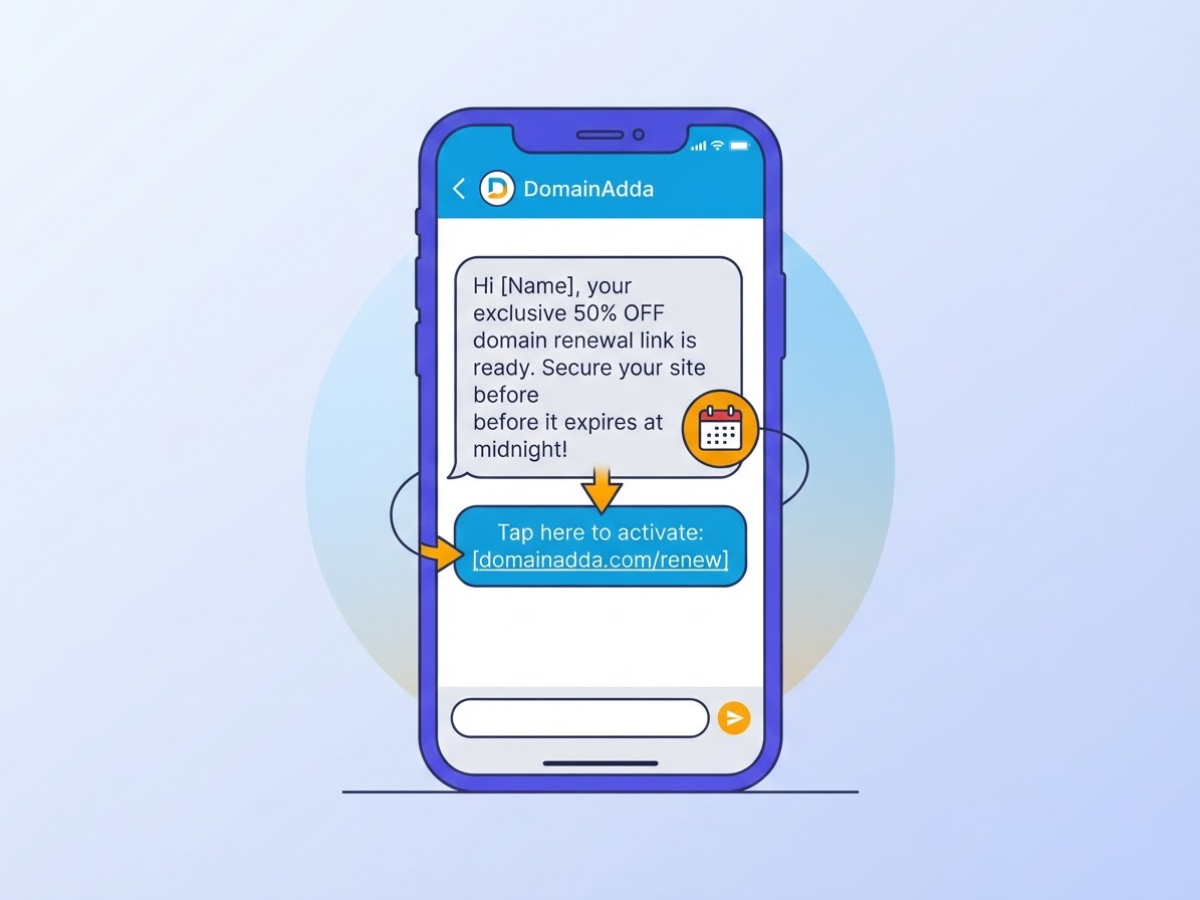
A message gets noticed because it arrives at the right moment. It converts only when the reader can quickly see the benefit, trust the sender, and act without solving a puzzle. In client campaigns at DomainAdda, the usual failure is not low attention. It is unclear next steps.
The conversion path is simple: relevance → clarity → trust → urgency → frictionless action. Miss one link and the text weakens. A discount sent after a customer already bought is irrelevant; a vague “Shop now” link creates friction; an unexplained short code can look suspicious.
A strong SMS usually contains these parts:
| Part | What it should do |
|---|---|
| Brand | Identify the sender immediately. |
| Context | Explain why the recipient is receiving it. |
| Benefit | Put the useful outcome near the beginning. |
| Offer | State the discount, price, access, or other value. |
| CTA | Give one clear action, such as “Book today.” |
| Compliance | Add required consent, opt-out, or message terms. |
Mobile readers often scan the first line from a lock screen or notification preview. Put the main value proposition early, not after a greeting and three lines of brand theater. A short link, a single CTA, and a landing page that matches the promise matter more than decorative emojis. If you manage several channels, centralizing customer conversations in one messaging platform can also reduce the annoying copy-and-paste errors that cause mismatched offers.
Match the copy to the message type. Promotional texts sell an offer. Transactional messages confirm an order or payment. Reminder texts reduce missed appointments. Triggered messages respond to behavior, such as an abandoned cart, and usually deserve more personalization than a broad campaign.
Here is the useful before-and-after test:
- Before: “Big news from DomainAdda! Don’t miss out. Click here.”
- After: “DomainAdda: Save 20% on SMS credits until Friday. Claim your offer: [link] Reply STOP to opt out.”
The second version names the sender, gives context, states the benefit, sets a deadline, and removes guesswork. That structure matters: 73% of surveyed consumers reported purchasing after receiving a brand text. Next, turn these principles into a repeatable writing process.
How to Write an SMS That Drives One Clear Action
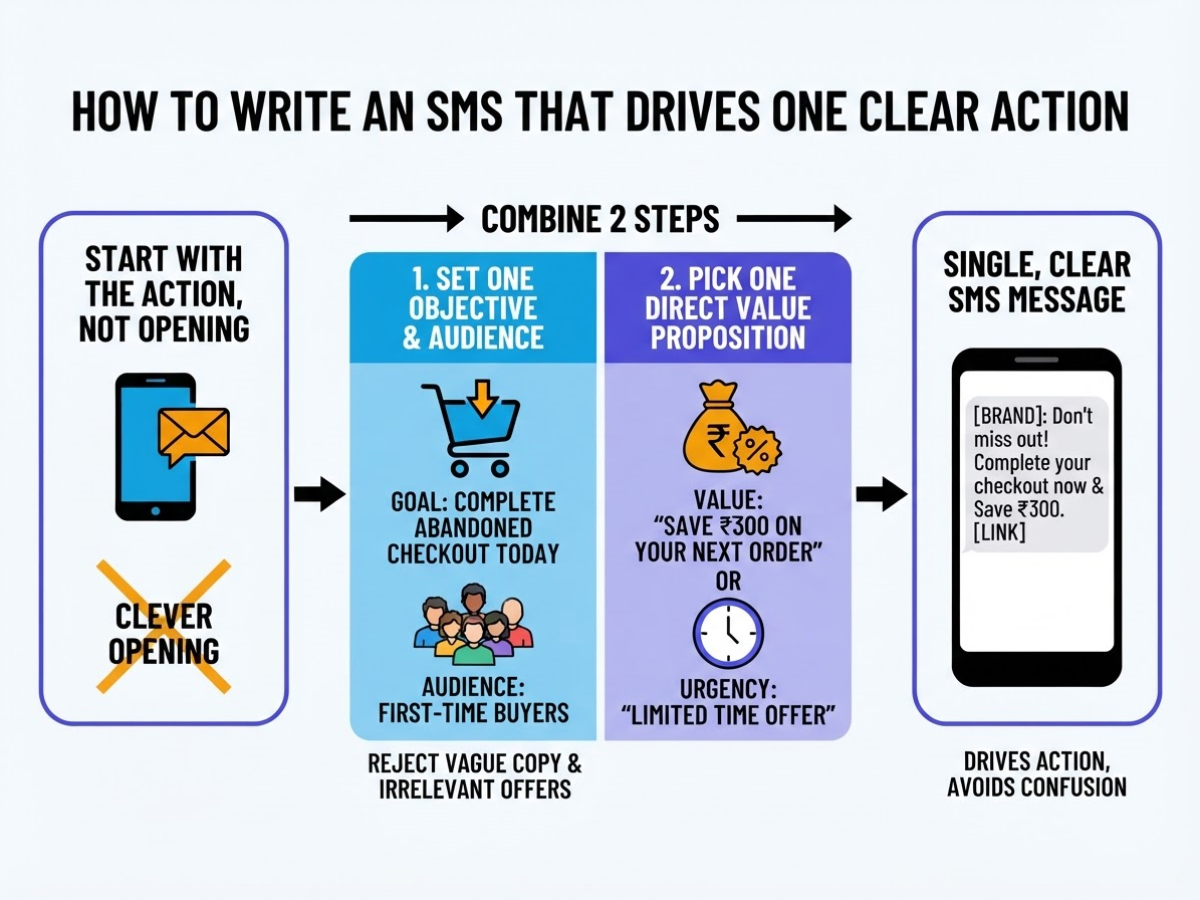
Start with the action you want the recipient to take, not with a clever opening line. When I review campaign drafts, the usual problem is not weak wording. It is a message trying to sell, educate, remind, and collect feedback at the same time.
- Set one objective and one audience. Write the goal in a single sentence: “Get customers with abandoned carts to complete checkout today.” Then define the segment, such as first-time buyers, customers near a store, or people with an appointment tomorrow. A broad “send to everyone” audience usually produces vague copy and irrelevant offers.
- Pick one direct value proposition. Give the reader a reason to act now. Choose savings, convenience, urgency, access, or reassurance. For example: “Save ₹300 on your next order,” “Skip the queue with online check-in,” or “Your 10 a.m. appointment is confirmed.” Avoid stacking a discount, free delivery, loyalty points, and a product announcement into one text.
Pro Tip: Draft the CTA before the body copy; it forces the message to support one measurable outcome rather than several competing ones.
- Add useful personal context. Use the customer’s name, but do not mistake a name tag for real personalization. Mention the product they viewed, the appointment they booked, their nearby location, or the behavior that triggered the message. “Priya, your laptop is back in stock” feels more relevant than “Hi Priya, check out our latest deals.” Behavior-triggered SMS flows average click rates near 10%, compared with about half that for broad campaigns, according to Klaviyo’s 2026 benchmark data.
- Write a CTA that explains the next screen. “Claim your ₹300 discount” is clearer than “Shop now.” Better still, state what happens after the tap: “Choose a delivery slot,” “Confirm your appointment,” or “View your saved cart.” Use one link and one primary action. Multiple buttons do not exist in a standard text, so multiple CTAs only create hesitation.
- Make the message trustworthy and timely. Identify your business in the sender name or opening line, use a branded and secure link, and send when the action makes sense. A lunch offer at 2 a.m. feels careless. If you need a provider or delivery setup, review how to choose the right bulk SMS provider in India before blaming copy for delivery problems.
- Edit for the phone screen. Remove greetings that add nothing, repeated benefits, filler adjectives, and unnecessary punctuation. Read the text aloud, then check it in a real messaging app. Messages longer than 240 characters convert 8.5% worse than those between 160 and 240 characters, so cut hard without hiding the offer, deadline, or CTA. Next, test the finished version against a shorter variation with the same audience and objective.
Campaign SMS vs Triggered SMS: Which Converts Better?
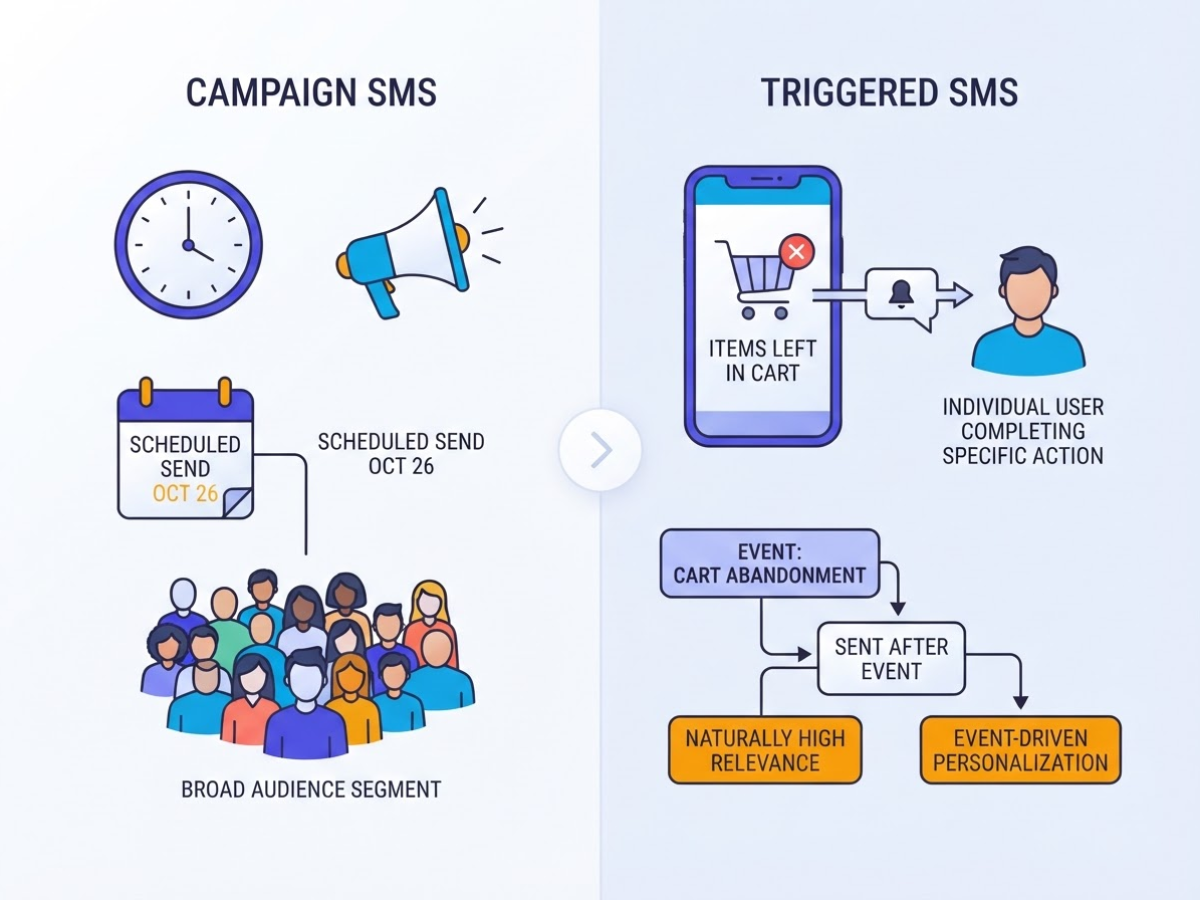
The deciding factor is the customer’s immediate context. A campaign reaches a selected audience because you want to announce something. A triggered SMS arrives because the recipient just did something, or failed to do it, and that difference usually affects conversion more than clever copy.
| Factor | Campaign SMS | Triggered SMS |
|---|---|---|
| Audience | A broad segment, such as all subscribers in one region | People who completed a specific action or reached a defined condition |
| Timing | A scheduled send chosen by your team | Sent after an event, such as a cart abandonment or booking |
| Relevance | Depends on how tightly you segment the list | Naturally high because the message follows customer behavior |
| Personalization | Name, location, offer, or product category | Event details, cart contents, appointment time, or reorder timing |
| Typical use | Product launches, seasonal sales, and time-bound announcements | Welcome flows, abandoned carts, reminders, delivery updates, and replenishment prompts |
Triggered messages deserve priority when you can connect them to a real event. Send a welcome text after sign-up, an abandoned-cart reminder within a few hours, an appointment reminder 24 hours before the booking, and a delivery update when the parcel moves. A replenishment prompt can arrive around the customer’s usual reorder date, not when your calendar happens to say so. The setup takes more testing, and bad event data can create embarrassing messages, but the context does much of the selling.
Pro Tip: Prioritize a small set of behavior-triggered journeys before increasing broadcast volume; relevance often matters more than sending more messages.
Broad campaigns still earn their place. Use them when everyone needs the same information: a new product launch, a weekend sale ending Sunday, a seasonal offer, or a service outage. Campaigns are easier to plan and send at scale, but weak segmentation makes them feel like interruptions. Keep the audience specific enough that the offer fits, and suppress people who already bought.
Do not judge both formats against one average. Klaviyo’s benchmark reports a 5.6% click-through rate and 0.27% ecommerce order rate for campaigns, compared with 9.65% and 1.9% for flows. Treat those as working reference points, not promises. Measure each flow against its trigger and each campaign against its audience, offer, and send time. The next step is turning that context into a message with one unmistakable action.
Five SMS Copy Mistakes That Quietly Reduce Conversions
Most conversion leaks start with copy that feels harmless in isolation. A vague “Shop now” offer, a CTA buried after three competing ideas, or a link with no explanation makes the reader pause. In SMS, that pause often becomes a deleted message.
Common mistakes to catch before sending:
- Vague offers: “Save big today” gives no amount, product, or reason to act. State the benefit plainly, such as “Get 20% off running shoes.”
- Too many ideas: Discounts, product news, a survey, and an app download do not belong in one text. Pick one primary action, then cut anything that competes with it.
- Forced urgency: “Last chance” loses credibility when the same offer returns tomorrow. Use a real expiry date and avoid countdown language unless the deadline is genuine.
- Unexplained links: A bare short URL can look suspicious. Add context: “View your order” or “Claim your 20% code.”
- Generic personalization: “Hi {{first_name}}, here’s something for you” is not relevant personalization. Use a customer’s recent action, location, or product interest only when the data is reliable.
- Identity and promise gaps: The sender name should make sense immediately. If the text promises free delivery but the landing page adds a delivery fee, expect abandoned visits and complaints.
- Poor timing and repetition: Do not send promotional texts at 7 a.m. or 11 p.m. local time. Repeating one offer every other day also trains customers to ignore you or opt out.
Before approval, check spelling, variable fallbacks, discount codes, link destinations, expiry dates, and the wording of your opt-out instruction. Commercial senders in India must also follow applicable TRAI registration, header, template, and consent requirements, so compliance is not something to patch in after launch.
Separate copy failures from technical failures. A persuasive message still underperforms if tracking links break, redirects fail, the coupon is invalid, or segmentation sends a win-back offer to a recent buyer. Test the full path on a real phone, then review delivery, clicks, and unsubscribes by segment before blaming the wording. For broader planning, SMS marketing guidance for businesses can help you review the campaign around the message, not just the sentence itself. Next, examine how timing and audience selection can magnify or hide these copy problems.
How to Test SMS Copy and Improve Conversion Rates
The first report I check is not the open rate. SMS open rates are so high that they often flatter weak copy, while clicks and purchases expose what actually happened.
- Choose the scorecard before sending. Set one primary metric, usually conversion rate or revenue per message, then track click-through rate, delivery rate, and opt-out rate as secondary measures. Revenue per message is especially useful when one version wins clicks but attracts low-value orders. Delivery rate also prevents you from blaming copy for a carrier or list-quality problem. For a useful benchmark, Klaviyo’s 2026 SMS data covers more than 183,000 customers and separates campaign performance from flow performance.
- Run one controlled test. Change only one variable: offer framing, CTA wording, personalization, message length, send time, or landing page. Testing a discount, a new button phrase, and a shorter page in the same split tells you almost nothing. I usually start with the CTA because it is quick to change, then test length and timing. Long copy is not automatically persuasive: messages above 240 characters have an 8.5% lower conversion rate than those between 160 and 240 characters in Attentive’s analysis.
- Add a holdout and wait long enough. Keep 5% to 10% of the eligible audience unmessaged when the campaign goal supports it. Compare incremental conversions and revenue against that group, not just the exposed audience. For a list under 10,000 contacts, run the test for at least seven days and aim for 1,000 delivered messages per variant where possible. Larger lists can often reach a decision in 48 to 72 hours, but wait through the normal purchase window before calling a winner.
- Read the result by context. Break reports into campaigns versus flows, new versus returning buyers, high- versus low-intent audiences, and mobile device behavior. A flow can outperform a broadcast because its timing is better, not because every sentence is superior. Save the winning structure in your SMS marketing planning process, then update the relevant template or automation and retest the next meaningful variable.
That testing history gives your future messages a clearer starting point, which matters when you refine the next conversion-focused SMS.
When SMS Is Not the Best Conversion Channel
Some conversion problems are too complicated for a text box. If a customer needs a product comparison, setup instructions, several terms and conditions, or a full account history, forcing everything into 160 characters creates confusion and extra support work.
Email usually wins when the reader must study, save, or revisit the information. Use it for onboarding lessons, invoices with line items, insurance quotes, plan comparisons, policy changes, and account pages with several required fields. SMS is better for urgency and one small action: “Your appointment is tomorrow at 10 a.m.,” “Your code expires in 10 minutes,” or “Reply YES to confirm.”
A practical channel check looks like this:
| Question | Better choice |
|---|---|
| Does the customer need an answer within minutes? | SMS |
| Will the message run beyond a few short sentences? | Email, with SMS as a prompt |
| Does the customer need images, branding, or interactive choices? | Rich messaging or email |
| Has the customer clearly permitted this type of contact? | Use only the approved channel and purpose |
| Is the desired action a quick reply or tap? | SMS |
| Must the customer compare, upload, or complete several fields? | Email or an account portal |
Do not send the same announcement by text and email at the same time. That feels like pressure, and customers may act on an outdated link. Instead, use a coordinated SMS and email approach: email the full explanation, then text a short reminder when the deadline approaches.
Rich messaging deserves consideration when a screenshot, product image, logo, map, or menu changes the customer’s understanding. An Omdia survey found that 42% of respondents preferred business messages containing both text and images. For a spoken walkthrough or support interaction, a voice platform built for multilingual customer conversations may fit better than either channel.
Choose the channel around the customer’s urgency, attention span, permission, and next action. That choice keeps your conversion goal intact without making SMS carry information it cannot handle.
My honest take on writing SMS messages that convert
I have reviewed enough Bulk SMS campaigns at AVM Cloud to distrust “clever” copy. Conversion usually comes from making one believable promise at the right moment, then removing every avoidable obstacle between the message and the action. A discount sent five minutes after a customer abandons checkout can beat a beautifully written broadcast sent to an indifferent list.
Here’s the contrarian point: shorter is not automatically better. A 90-character message may look tidy, but it can underperform a 150-character version that names the product, explains the deadline, identifies the sender, and gives people a reason to trust the link. Cutting useful context just to save characters often creates hesitation, especially when the recipient does not immediately recognize your brand.
I put triggered journeys near the top of the testing queue because they respond to intent. Welcome messages, abandoned-cart reminders, delivery updates, and renewal notices have a job to do. Broad campaigns still have a place, but I use them selectively because repeated blasts create fatigue, complaints, and unsubscribes faster than many teams expect. The frustrating part is that clicks can make a weak campaign look healthy.
My practical process is simple: write one message, send it to a small audience, test the link, check consent and required compliance details, then scale only after reviewing revenue per delivered message and opt-outs, not clicks alone.
— AVM Cloud Content Strategy Team
Turn Better SMS Copy Into More Campaigns With AVM Cloud
If your SMS workflow still depends on spreadsheets, manual uploads, or stitching together delivery tools, AVM Cloud can be a practical next step. Using DomainAdda’s SMS marketing services, you can handle promotional offers, appointment reminders, and transactional updates without building the sending infrastructure yourself.
Start by reviewing one use case, such as abandoned enquiries or order confirmations. Then compare affordable bulk SMS provider options in India and test two message formats with a small audience. Keep consent, timing, and the landing page in the plan. The service will not fix unclear copy or a weak offer, and setup can still require some trial and error. If you want to compare campaign approaches, explore practical SMS marketing methods before choosing a sending option that fits your budget.
Frequently Asked Questions
What is the ideal length for a marketing SMS?
Keep the message focused on one offer, one benefit, and one action, with the key details visible before the reader taps. Attentive reports that messages longer than 240 characters have an 8.5% lower conversion rate than messages between 160 and 240 characters, so remove anything that does not help the recipient decide.
How do I write an SMS call to action?
Use one clear verb and state what the recipient gets, such as “Book your slot” or “Claim 20% off,” instead of adding several competing links. Send the CTA to a mobile-friendly page that repeats the same offer, because a mismatch between the text and landing page quickly erodes trust.
What is a good conversion rate for SMS marketing?
There is no useful universal target because results change with the audience, offer, industry, and campaign type. Klaviyo’s 2026 benchmark lists ecommerce order rates of 0.27% for campaigns and 1.9% for flows, so compare your result with the closest format rather than judging every message against one number.
How often should a business send promotional text messages?
Start with a conservative schedule, such as 2 promotional texts per month, then adjust it based on opt-outs, complaints, and revenue per delivered message. Your buying cycle and consent terms matter more than a fixed calendar, while triggered messages can replace irrelevant broadcasts when a customer takes a specific action.
Do I need permission to send marketing SMS messages in India?
Yes, businesses sending applicable commercial SMS in India must follow relevant TRAI requirements, which may include Principal Entity registration, header registration, content-template registration, and customer consent. Check the current rules and your provider’s setup before sending, because missing even 1 required registration or approval can stop delivery or create compliance problems.
Recommended reads
- Sms Marketing 2023 How To Market Your Business Effectively And Easily
- How To Choose The Right Bulk Sms Provider In India
- Integrating Bulk Sms With Email Marketing
- Essential Sms Marketing Terms Every Business Should Know
Sources
- 2026 SMS Marketing Benchmarks & Stats by Industry – Klaviyo
- The Anatomy of High-Performing SMS Campaigns: 25 Billion Messages Reveal What Works — Blog | Attentive
- What is SMS Marketing? Definition + Guide for 2026 – Klaviyo
- 2024 SMS Marketing Consumer Behavior Report | EZ Texting
- Business Messaging Costumer Survey 2024
- Advice to Senders | Telecom Regulatory Authority of India | Government of India
- OMDIA Figure 11: What format of marketing/notific
- How SNDYS Drove 90x ROAS With Attentive’s Triggered SMS Journeys