

How DomainAdda Makes Bulk SMS Affordable
TL;DR: DomainAdda makes bulk SMS more affordable through volume-based Starter and Advance plans, unlimited validity, Excel contact imports, delivery reports, and refunds for messages blocked by DND rules. Choose the smallest plan that matches your campaign volume, then use compliant targeting and delivery checks to avoid paying for wasted sends.
If you need to alert customers about stock, appointments, or payment deadlines, every delay costs attention, but a monthly software bill and unused SMS credits can hurt just as much. I have seen small Indian teams postpone campaigns because they could not tell whether they were buying useful reach or paying for leftovers. That concern is reasonable: published Indian SMS pricing shows rates falling from 28 paise at 2,000 messages to 16.50 paise at 10 lakh. This guide explains how DomainAdda’s plans price bulk SMS, what the panel and reports include, how to buy and set up a campaign, where TRAI rules apply, and how to avoid messages that create no value.
| Point | Details |
|---|---|
| Starter plan economics | The Starter plan costs ₹2,000 for 10,000 messages, or ₹0.20 per message before campaign results are counted. |
| Advance volume value | The Advance plan costs ₹7,500 for 50,000 messages, bringing the rate to ₹0.15 each and undercutting the Starter plan. |
| Built-in campaign tools | Both plans include unlimited validity, a web panel, Excel import, DND refunds, and delivery reports, although first-time setup can still feel fiddly. |
| Compliance protects spend | TRAI compliance requires commercial senders to manage Principal Entity registration, headers, templates, and consent where applicable, or wasted messages can become the least of your problems. |
| Measure before scaling | Delivery reports and scheduled sending let you check campaign timing and results before committing to a larger message volume. |
What “affordable” means in bulk SMS pricing
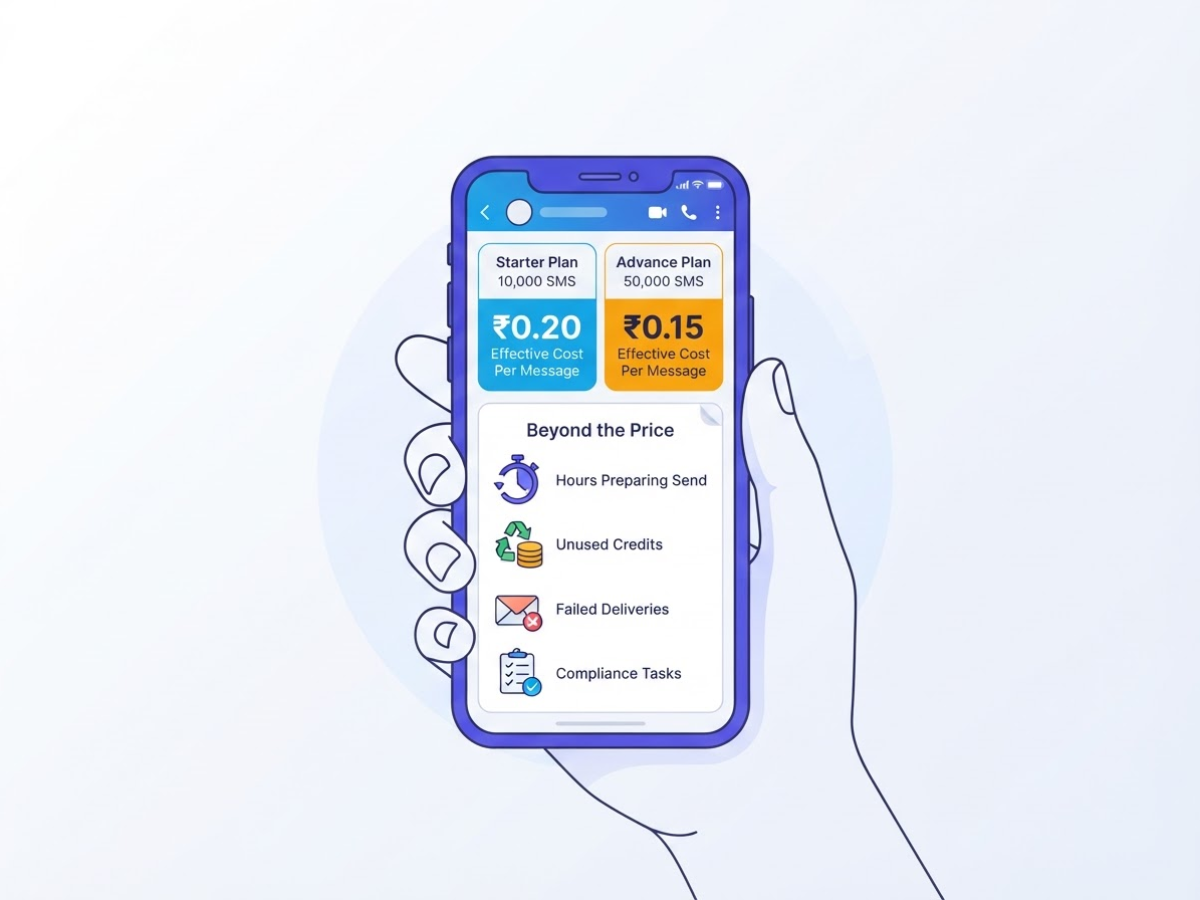
Affordability in bulk SMS is not simply the lowest number on a pricing page. When I price a campaign, I start with the effective cost per message, then check what happens to unused credits, failed deliveries, compliance tasks, and the hours someone spends preparing the send.
Using DomainAdda’s listed prices, the basic calculation looks like this:
| Plan | Listed price | Included messages | Effective price per message |
|---|---|---|---|
| Starter | ₹2,000 | 10,000 | ₹0.20 |
| Advance | ₹7,500 | 50,000 | ₹0.15 |
The Starter plan details show 10,000 messages for ₹2,000, while the Advance plan details show 50,000 for ₹7,500. On the headline calculation, Advance costs 5 paise less per message. That saving matters if you regularly send near 50,000 messages, but it may not justify paying ₹7,500 when your actual audience is only 12,000 people.
Unlimited validity changes the calculation for irregular campaigns. You do not face the usual pressure to burn credits before a short expiry date, so a seasonal retailer can use part of a balance for a sale and return to it for a festival campaign later. The annoyance is that unused credits still represent money tied up, even when they do not expire.
Your total campaign cost can include:
- Credits that remain unused or messages that fail
- DND, consent, header, and template compliance work
- Staff time spent cleaning Excel files and checking reports
- Separate costs for scheduling, delivery tracking, or contact management software
Included tools such as a web panel, Excel import, DND refund, and delivery reports can reduce the need for extra software. They do not remove setup mistakes, though. A poorly formatted contact sheet or an unapproved template can still delay a send and waste staff time.
Pro Tip: Compare the cost per usable message, not merely the advertised package price, especially when campaigns are irregular.
These figures use the listed plan prices, not a promised campaign ROI. Your next comparison should examine how each plan fits your sending pattern and operating workload.
Starter or Advance: which plan lowers your real cost?
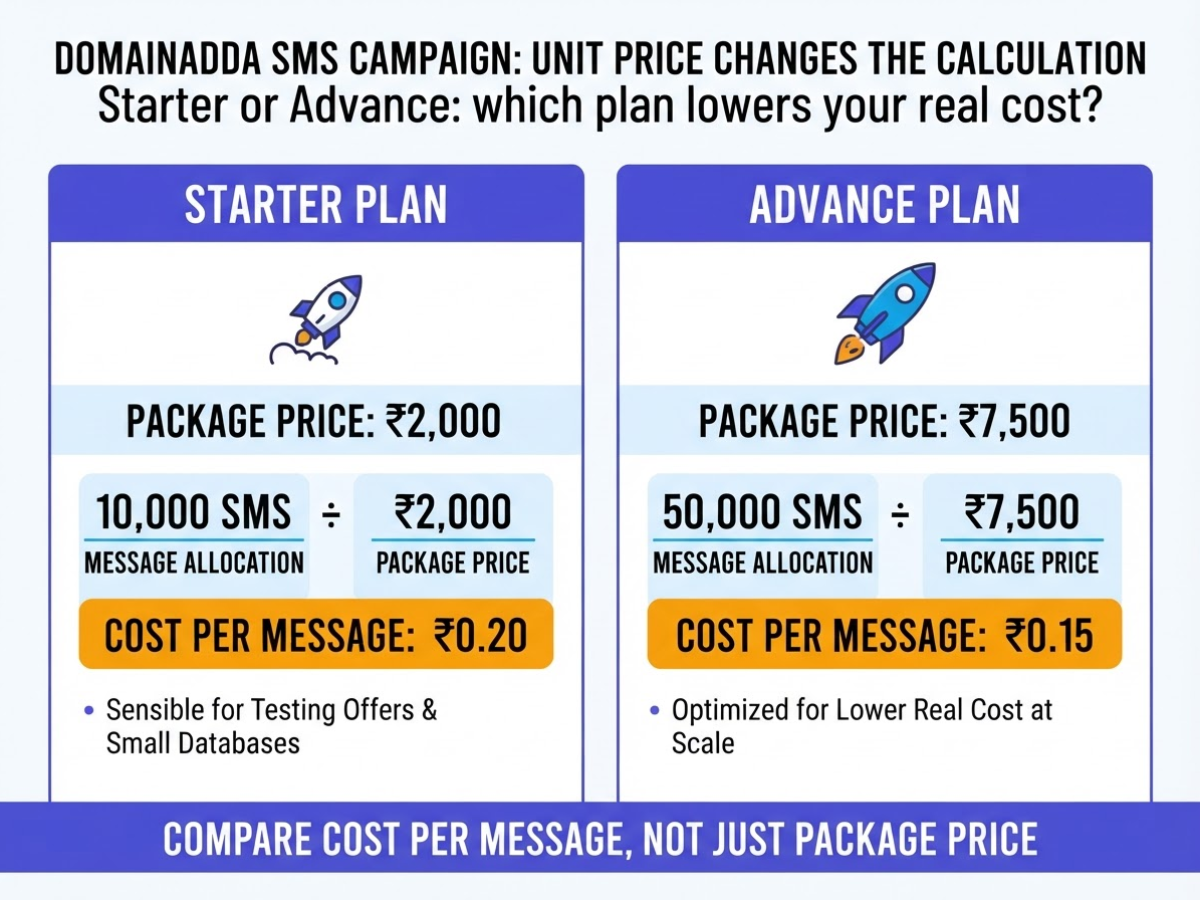
When I help businesses plan their first SMS campaign, the same mistake appears often: they compare the package price, not the cost of the messages they will actually send. DomainAdda’s two plans look far apart at checkout, but the unit price changes the calculation.
| Plan | Message allocation | Listed price | Cost per message | Validity | Included features |
|---|---|---|---|---|---|
| Starter | 10,000 SMS | ₹2,000 | ₹0.20 | Unlimited | Web panel, DND refund, Excel import, delivery reports |
| Advance | 50,000 SMS | ₹7,500 | ₹0.15 | Unlimited | Web panel, DND refund, Excel import, delivery reports |
The Starter plan details make it the sensible choice for testing a new offer, reaching a smaller customer database, or running occasional seasonal campaigns. A local clinic sending appointment reminders to 1,500 contacts, or a retailer promoting Diwali offers twice a year, may never use 50,000 credits. Paying ₹2,000 keeps the first experiment contained and limits the annoyance of unused balance.
Advance reduces the listed unit price by 25%, from ₹0.20 to ₹0.15. It suits recurring campaigns, larger customer lists, and teams that can responsibly use 50,000 credits during the validity period. A business sending 8,000 messages every month could use the allocation in roughly six months, assuming the campaigns remain relevant and compliant. The included features are the same, so you are paying mainly for volume, not extra tools.
Pro Tip: Use a conservative three-month sending estimate before choosing Advance; a lower unit price is not a saving if most credits remain unused.
The broader pricing pattern is normal: published Indian SMS schedules reduce rates as volume rises, with one schedule moving from 28p at 2,000 messages to 16.50p at 10,00,000. That does not make bulk buying automatically wise. Poorly cleaned contact lists, weak message timing, and unplanned campaigns can leave credits sitting unused while your team still pays to send messages elsewhere.
For a practical selection check, compare expected monthly sends, database size, campaign frequency, and whether someone owns list maintenance. Our guide to choosing the right bulk SMS provider in India covers those operational checks too. Once the volume decision is clear, the next cost question is how efficiently each campaign turns credits into useful responses.
A low-waste workflow for sending affordable campaigns
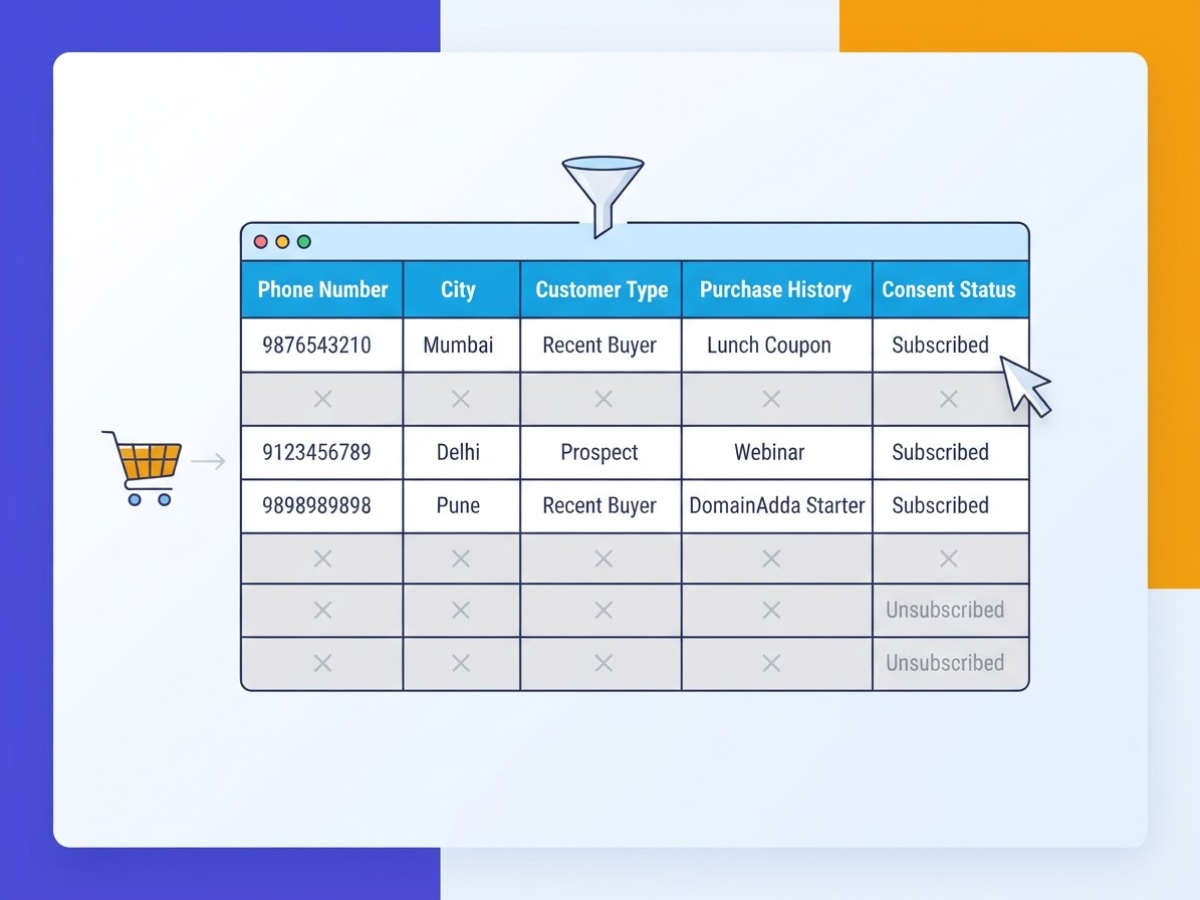
Waste usually starts before you press Send. In campaign setups I review, teams upload every phone number they have, then pay to reach people who cannot use the offer. A permission-based spreadsheet is the cheaper starting point: remove duplicates, invalid numbers, old records, and anyone who opted out. Add useful labels such as city, customer type, or purchase history. Segmentation stops a restaurant from sending a lunch coupon to a customer who lives 500 kilometres away.
- Prepare the audience. Keep one clean Excel file for each campaign segment. Separate recent buyers from prospects, and do not mix promotional contacts with people who only agreed to receive service updates. This small bit of housekeeping prevents irrelevant sends and makes later results easier to read.
- Import through the web panel. Upload the Excel file in DomainAdda’s web-based panel, then check the imported count against your spreadsheet. The first upload can be irritating if phone numbers use mixed formats, so fix the sheet rather than repeatedly retrying the import. DomainAdda lists Excel import and delivery reports among the Starter plan features, which is useful when you are controlling a smaller package.
- Choose the campaign type and write the message. Select the appropriate promotional or transactional route, then keep the copy specific: offer, expiry date, and one action. Before proceeding, review the recipient list on screen. Look for the wrong segment, unexpected duplicates, and numbers that should have been excluded.
- Test before committing volume. Send the message to a small audience first, perhaps 50 to 100 opted-in contacts. If you have two message variations, split that test and compare clicks, replies, or redemptions. Most teams overvalue a clever rewrite and undervalue a bad audience filter. A test catches both without consuming a large package.
- Schedule, monitor, and decide. Use scheduled sending for a planned product launch, appointment reminder, or offer that expires at a stated time. DomainAdda says its promotional SMS service supports scheduled sending and delivery reports through its Bulk SMS service. After delivery, compare sent, delivered, failed, and response counts. A weak result may call for a different segment, timing, or message, not automatically a larger package.
Pro Tip: Keep a campaign ledger with audience size, scheduled time, delivered count, and response so the next package decision uses evidence rather than guesswork.
Before any commercial send in India, check that your business is registered as a Principal Entity and that the header, content template, and required consent records are in place. TRAI’s sender guidance is the checkpoint to use, not an afterthought after complaints begin. With the workflow clean, your next decision is whether automation can reduce manual campaign work further.
Who benefits most from DomainAdda’s pricing model?
Retailers, education providers, clinics, service businesses, ecommerce operators, and event organizers usually get the clearest value from DomainAdda when they need direct reach without buying a full marketing-automation stack. A local retailer can announce a weekend offer, while a clinic can remind patients about appointments. Digital interactions are already routine in India: digital payments represented 97.6% of total payment value in 2024–25, so customers often expect quick, mobile-first updates.
The sensible plan depends on how often you send, not how impressive the package looks:
| Business situation | Better starting point | Why |
|---|---|---|
| Testing a new offer, sending occasional updates, or managing a moderate list | Starter | ₹2,000 covers 10,000 messages, with unlimited validity, Excel import, a web panel, DND refunds, and delivery reports |
| Sending recurring reminders, promotions, or event updates to a known audience | Advance | ₹7,500 covers 50,000 messages and gives predictable headroom for regular volume |
I have found Starter easier for small teams that are still learning what customers respond to. Advance makes more sense when you already know the monthly pattern and do not want to top up halfway through a campaign. Buying Advance for a list you barely use is false economy.
The web-based panel and Excel import also suit teams working from a spreadsheet rather than a dedicated automation system. That is useful for a coaching centre, clinic receptionist, or event coordinator who needs to upload numbers and send a prepared message. The downside is familiar: messy columns, duplicate numbers, and old consent records can turn a five-minute upload into a cleanup job.
Delivery reports provide basic campaign visibility without forcing a small business to learn complex analytics. You can see whether a campaign reached its destination and decide whether to resend, change the offer, or stop wasting credits. For deeper attribution, segmentation, or automated customer journeys, choose a platform built for those jobs instead.
Before purchasing for transactional or regulated messages, validate your sender, registered header, template, consent, and route requirements under TRAI’s commercial communication rules. Affordability works best when your audience has opted in, the message fits its purpose, and someone actually reviews the reports. The next decision is whether your sending process can keep that discipline as volume grows.
Costly bulk SMS mistakes to avoid
The cheapest rate can become expensive when you buy more messages than your audience will use. I have seen teams choose a 50,000-message bundle because the unit price looks attractive, then watch thousands expire unused in practice. Start with your expected sends for the next 60 to 90 days, add a modest buffer, and upgrade only when your actual usage supports it.
Before importing a spreadsheet, clean it. Duplicate contacts can receive the same offer twice, while invalid or recycled numbers consume time and distort your delivery figures. A broad blast to every contact is another common drain. Segment by location, purchase history, customer status, or consent instead of sending a discount for winter shoes to the entire database.
These are the mistakes I check first:
- Buying a large bundle solely for a lower per-message price.
- Uploading duplicate, incomplete, or invalid mobile numbers.
- Sending the same message to inactive contacts or people outside the target audience.
- Repeating a campaign to non-responders without changing the offer, timing, or audience.
- Treating delivery as success without recording replies, sales, or completed actions.
- Assuming a DND refund makes unsolicited messaging acceptable.
DomainAdda’s DND refund can help recover charges for eligible undelivered messages, but it is not a substitute for permission-based list management. Remove opt-outs, record when consent was collected, and suppress contacts who repeatedly ignore relevant messages. Refunds reduce some wastage; they do not repair a damaged sender reputation or a poorly chosen audience.
Compliance mistakes can cost more than the SMS credits. For commercial communication in India, TRAI requires the sender to register as a Principal Entity, register a header and content templates, register consent templates where applicable, and obtain consumer consent where required. TRAI’s sender guidance also defines a commercial SMS header as an alphanumeric string no longer than 11 characters. Build those requirements into your setup rather than trying to fix rejected campaigns later.
Finally, do not judge a campaign by delivery alone. Track delivery rate, response rate, conversions, and cost per action. A campaign with 98% delivery but no enquiries is weaker than one with 90% delivery that produces qualified leads. For a practical reporting framework, review how to measure the ROI of bulk SMS campaigns before committing to your next volume tier.
With waste and compliance under control, the next section can focus on the results an affordable SMS plan should produce.
My honest take on DomainAdda’s bulk SMS affordability
I assess DomainAdda’s affordability by looking beyond the headline rates. The ₹0.20 Starter rate and ₹0.15 Advance rate matter, but they are not the whole case. The better argument is that volume pricing comes with unlimited validity, spreadsheet import, DND refunds, and reporting in the same service. For a small team, avoiding separate tools and manual number handling can save more time and money than chasing the lowest per-message price.
Here’s the part I would challenge: the Advance plan is not automatically the better deal. Buying 50,000 messages before you know your audience size, consent quality, or response rate can leave you paying for unused reach. I have seen businesses focus on the cheaper unit price while ignoring poor targeting, invalid data, and campaigns that generate replies nobody follows up on. Delivery also does not equal conversion.
I would recheck the listed prices and plan terms before purchase, because pricing can change. You still own the compliance work, including consent and message rules, and DND refunds do not excuse careless list building. My practical route is to estimate three months of demand, test one focused segment, review the reports, and scale only after the numbers prove the economics.
— AVM Cloud Content Strategy Team
Ready to make your SMS budget work harder?
If you want to test bulk SMS without guessing your budget, start with your expected message volume for the next three months. Review DomainAdda’s plans, prepare a permission-based contact file, and choose the smallest package that can support a meaningful campaign. Buying too many credits upfront is an easy way to waste money, especially if your list or delivery schedule changes.
The practical value comes from pairing lower message rates with tools that reduce copying, uploading, and checking work across separate systems. That said, the first setup can still feel fiddly if your spreadsheet contains duplicate numbers or missing consent records. Use the bulk SMS setup guide before sending, then compare the available bulk SMS plans against your test volume. Confirm current pricing, eligibility, sender rules, and compliance requirements before launching the campaign.
Frequently Asked Questions
How much does it cost to send 10,000 bulk SMS with DomainAdda?
DomainAdda’s listed Starter plan costs ₹2,000 for 10,000 messages, or ₹0.20 per SMS. It also lists unlimited validity and campaign-management features, although you should confirm the current package details before paying.
Is bulk SMS cheaper than WhatsApp or email marketing?
There is no universal winner because channel prices and response rates vary, but comparing 3 figures helps: delivery cost, conversion rate, and revenue per action. Count setup, list quality, and follow-up work too, since a cheap message is not a good deal if it produces no useful response.
Can I schedule bulk SMS messages in advance with DomainAdda?
Yes, DomainAdda states that its promotional SMS service supports scheduled sending through its API. Scheduling reminders 24 hours before an appointment or launching an offer at a fixed time can reduce manual work, but you still need to check message rules and test the timing first.
What is the difference between promotional and transactional SMS in India?
Promotional SMS usually advertises an offer or campaign, while transactional SMS supports a customer-requested or service-related event, such as a login code or booking update. The sender, template, consent, and regulatory requirements can differ, so verify the current Indian rules before sending even 1 campaign.
How do I calculate the return on investment of a bulk SMS campaign?
Subtract the total campaign cost from attributable profit, divide the result by campaign cost, and multiply by 100 to get ROI as a percentage. For example, ₹8,000 in attributable profit from a ₹2,000 campaign produces 300% ROI, provided your tracking excludes sales that came from other channels.
Recommended reads
- How To Choose The Right Bulk Sms Provider In India
- Step By Step Bulk Sms Setup With Domainadda
- Cost Comparison Bulk Sms Vs Other Channels
- Measuring The Roi Of Bulk Sms Campaigns
Sources
- Bulk SMS Service – Try APIs, Gateway, Reseller SMS
- Advice to Senders | Telecom Regulatory Authority of India | Government of India
- Microsoft Word – Final English TCCCPR Regulation_12.02.2025_2.00 pm
- SMS API pricing in India: 16.5p–28p per SMS + GST | SMSAPI
- The Indian payments handbook – 2024 – 2029
- COMMERCIAL BANKS